
Brielle’s Fetal Behavior

23988888653_3a707d0ec9_o
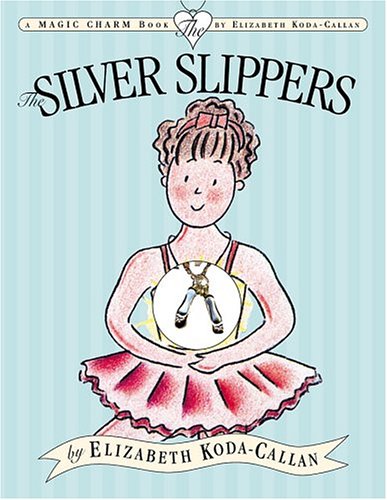
Image from GoodReads.

When David and I were first told that our baby has anencephaly, we were told that she would never exhibit normal fetal behavior and would not survive. We were told that she was, for all intents and purposes, a vegetable. I was told she would not move like a normal baby in utero and later told all of her movements were merely reflexes. I was also told she would never hear or develop any of her other senses. At barely 20 weeks, I had no idea what to believe. I had felt Brielle move, and it hadn’t felt like a reflex, but then again, I’d just started feeling her move. The week after her diagnosis I attempted to test her ability to understand, I read to her, I smelled flowers, I played her music, and I spoke to her. And here is what I found:

She repeatedly perked up when I said the word Daddy. She had immediate responses to smell, such as flowers, onions, and pineapple (some of her favorite things). She was incredibly quiet and still when I played her some music, her first song she danced to was on Father’s Day to Third Eye Blind’s “How’s It Going To Be.” Later that evening she went crazy dancing to OMI’s “Cheerleader” she especially liked the trumpet part. The more music I played to her, the more I learned that she preferred specific instruments or rhythmic beats. I read her books, and she remained quiet on nearly all of them except for “The Silver Slippers” by Elizabeth Koda-Callan, to which multiple times she would move around and kick me. Since then, we have continued to read to her Bible stories and she has, seemingly, found some more interesting than others. For a week, when David would come home and open the garage door, she would start kicking. She likes to be active for a few hours at a time in the mornings, late afternoon, and late evening, the rest of the day she prefers to sleep…and she’s a heavy sleeper like her Mommy. When I deny her a craving she will kick for hours and will not cease until I indulge that craving. When I wake up from a nap and say something, she jumps with excitement. During our second opinion ultrasound she rubbed her feet together, just like I do as I fall asleep, and just like my Papa did as he fell asleep.

When I asked the second doctor we spoke to about her, this doctor told me all of these things were just reflexes and she laughed at me for thinking that a fetus could respond to a book. And yet there has been plenty of research that shows that a fetus does in fact prefer some stories over others, although they don’t know why.

Based on my time with Brielle, I’ve learned she is not a vegetable, she can hear, she has likes, she’s stubborn, she likes music, and she loves to hear my voice. She even knows when I am speaking directly to her, she kicks in response to some of the things I say, I don’t understand it, but this is what I’m observing. I’ve seen my baby girl’s head twice, and each time it was missing a skull. There is no doubt that she has anencephaly. What I doubt is how well the medical community understands this disability. Am I missing something? Could this all just be a reflex? I find my personal doubts hard to believe as I feel her now moving to one of her favorites by The Killers “All These Things That I’ve Done.” Why do I feel all of these things and how is she so cognizant, if she is lacking a brain? And why can’t anyone save my baby? She is so sweet and gentle, why does the medical community not find her worth saving?

What Can a Fetus Do?

24319331610_6c6e77c76c_o

Super long post, but really worth the read, especially for any expectant moms and anyone wanting to have kids in the future.

Having gastroparesis has made me extremely sensitive to how my body works, and as a plus, has made me very sensitive to all of Brielle’s movements and I’ve learned to distinguish her different kicks, and her different responses to things. While I know that what she does is real and not a delusion on my part, I wanted to have some proof for others, that when I say she hears me, she dances, she likes pineapple, others understand that, yes, a baby in utero can and does do those things. They have feelings, they react to pain, they are sensitive to touch, etc. So I’m going to share some information on what is currently known about fetal development and I’ll provide links for reference, and in another post I’ll talk about how I’ve noticed differences with Brielle based on her diagnosis of anencephaly.

  • At 7 weeks a fetus emits a stress hormone to pain.
  • At 9 weeks a fetus can hiccup.
  • At 9 weeks a fetus can react to loud noises.
  • At 9 weeks a fetus begins to smell.
  • At 10 weeks a fetus begins to urinate.
  • At 10 weeks a fetus “moves its arms, ‘breathes’ amniotic fluid in and out, opens its jaw, and stretches. Before the first trimester is over, it yawns, sucks, and swallows as well as feels and smells.”
  • At 13-15 weeks a fetus has mature taste buds.
  • At 15 weeks a fetus begins to swallow amniotic fluid (amniotic fluid tastes and smells like the foods the mother eats). “The fetus likes certain tastes more than others, and will drink more amniotic fluid if it tastes sweet.”
  • At 16 weeks a fetus begins to hear.
  • “Neuroanatomical pathways necessary for processing pain, similar to those observed in adults and older children” begins at 18 weeks.
  • At four months a fetus responds to light.
  • At 20 weeks a fetus responds to touch.
  • At 22 weeks an aborted fetus is required by law to receive pain medication before the procedure begins.
  • At 24 weeks hearing development is complete.
  • “From six months onward, your baby’s sense of awareness of the world outside the womb grows exponentially. This is because her brain cortex is developed enough for thinking…you can also use noises to teach your baby when to kick.”
  • At six months: “Sonograms taken while parents yell at each other show the baby’s entire body flinching in agitation. They also often cover their ears.”
  • At 32 weeks a fetus is behaviorally the same as a newborn “the
    fetus can feel, dream, even enjoy The Cat in the Hat.”
  • “A new study suggests that short-term memory may be present in the fetus at 30 weeks of age. They found that the young neo-nate had a memory of ten minutes duration. By 34 weeks they were able to store information and retrieve it four weeks later (Journal of Child Development, 2009).”
  • A fetus experiences REM and dreams.
  • “The fetus savors its mother’s meals, first picking up the food
    tastes of a culture in the womb.”
  • “Among other mental feats, the fetus can distinguish between the
    voice of Mom and that of a stranger, and respond to a familiar story read to it.”
  • “The human fetus moves 50 times or more each hour.”
  • A fetus is calmed by its mother’s voice, and recognizes its mother’s voice over that of a stranger’s.
  • “A newborn prefers a story read to it repeatedly in the womb…over a new story introduced soon after birth.”
  • “Newborns can not only distinguish their mother from a stranger speaking, but would rather hear Mom’s voice, especially the way it sounds filtered through amniotic fluid rather than through air. They’re xenophobes, too: they prefer to hear Mom speaking in her native language than to hear her or someone else speaking in a foreign tongue.”
  • “By monitoring changes in fetal heart rate, psychologist JeanPierre Lecanuet and his colleagues in Paris have found that fetuses can even tell strangers’ voices apart. They also seem to like certain stories more than others.”
  • “The fetus can listen, learn, and remember at some level, and,
    as with most babies and children, it likes the comfort and reassurance of the familiar.”
  • “The older fetus can sense what the mother is feeling. If the mother feels stressed or anxious playing a computer game, scientists have shown that the fetal heart rate goes up while she is playing it.” I have noticed this with Brielle as early as 21 weeks.
  • “Researchers at the University of Turin and the University of Panama in Italy used ultra soundography to demonstrate that social interaction exists between twins in the womb as early as the 14th week of gestation. By the 18th week they spent more time in planned contact with their sibling than themselves. The results suggest that twin fetuses are aware of their counterparts in the womb, prefer to interact with them, and respond to them in a special way.”
  • “An unborn child can sense and react to emotions such as love and rejection but also to more complex emotions such as ambivalence and ambiguity.”

http://bit.ly/1J1pDUz

http://1.usa.gov/1HbXVWX

http://bit.ly/1HJ48LB

http://bit.ly/1CWPqLz

http://bit.ly/1NMM3go